
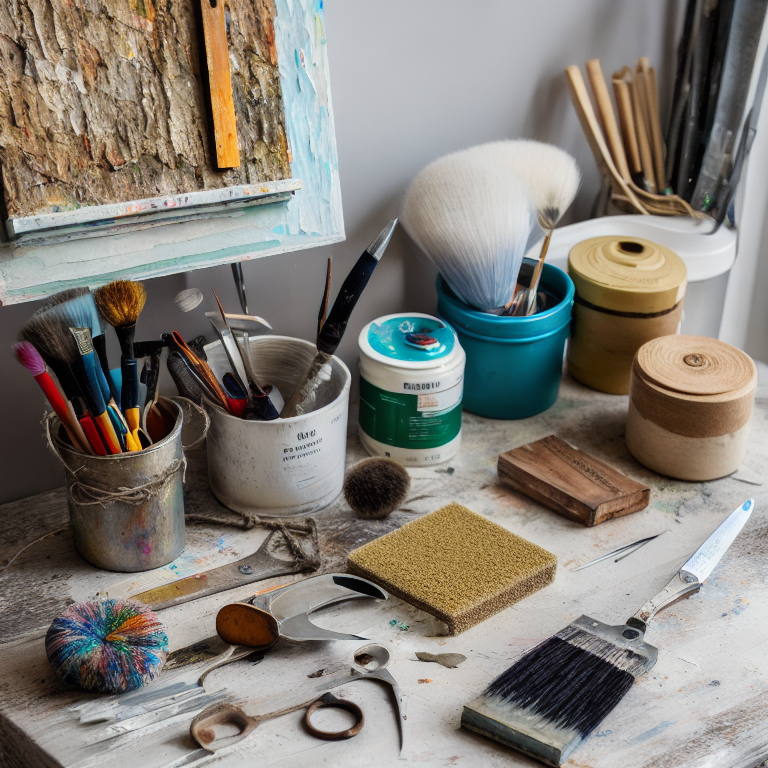
Have you ever looked at a painting and felt like you could reach out and touch the rough bark of a tree or the soft fur of an animal? That’s the magic of texture in art. Creating realistic textures can transform your artwork from flat and lifeless to rich and engaging. Whether you’re working with traditional materials like paint and canvas or exploring digital art, having the right tools makes all the difference.
In this guide, I’ll walk you through the best tools available for creating realistic textures in your artwork. From simple household items to professional-grade equipment, you’ll discover options for every budget and skill level. Let’s dive in and explore how you can bring your art to life with amazing textures.
Traditional Painting Tools for Texture
When most people think about creating texture in traditional painting, they picture thick brushstrokes and heavy paint. While that’s certainly one approach, there are many other tools that can help you achieve stunning textural effects.
Palette knives are perhaps the most versatile tool for creating texture in painting. These flat, flexible blades come in various shapes and sizes, allowing you to apply paint in thick layers, create sharp edges, or scrape away paint to reveal underlying colors. The beauty of palette knives is that they force you to work differently than with brushes, often leading to more dynamic and interesting textures.
Textured rollers and stamps can add repeating patterns quickly and efficiently. You can find rollers with various patterns like brick, stone, or abstract designs. These tools are especially useful when you need to create large areas of consistent texture, such as a stone wall or a field of grass.
Natural materials like sea sponges, crumpled paper, or even leaves can create organic, unpredictable textures. Sea sponges are particularly effective for creating foliage, clouds, or water effects. The irregular surface of a sponge creates patterns that look natural and unforced.
Specialty Brushes for Texture Effects
While regular brushes are essential for most painting techniques, specialty brushes designed specifically for texture can elevate your work to new heights. These brushes have unique bristle arrangements or shapes that help you create specific textural effects with ease.
Fan brushes are excellent for creating soft textures like clouds, fur, or distant foliage. The spread-out bristles allow you to apply paint in a way that naturally creates a soft, blended appearance. They’re also great for gently blending colors together while maintaining some texture.
Rigger brushes, with their long, thin bristles, are perfect for creating fine lines and textures like hair, grass, or tree branches. The length of the bristles allows for smooth, flowing strokes that maintain consistency in thickness.
Stippling brushes have short, stiff bristles arranged in a dense pattern. These are ideal for creating rough, speckled textures like stone, sand, or stippled highlights on metallic surfaces. The technique involves dabbing or pouncing the brush rather than stroking it across the surface.
Mixed Media Tools for Unique Textures
One of the most exciting developments in contemporary art is the use of mixed media to create textures. By combining different materials and techniques, you can achieve effects that would be impossible with paint alone.
Modeling paste is a thick, white acrylic medium that you can apply to your canvas before or during painting. Once dry, it creates a hard, sculptural surface that you can paint over. You can apply it smooth and flat, or use tools to create peaks and valleys in the surface. This is perfect for creating dramatic impasto effects or building up three-dimensional elements in your artwork.
Sand, sawdust, and other granular materials can be mixed directly into your paint or applied as a separate layer. These materials add physical texture that you can both see and feel. Sand works particularly well for beach scenes or desert landscapes, while sawdust can create interesting wood grain effects.
Fabric and paper elements can be collaged onto your surface to create texture before you begin painting. Old book pages, tissue paper, or even fabric scraps can add interesting visual and physical texture to your work. The paint will settle differently on these surfaces, creating natural variations in tone and texture.
Digital Tools for Texture Creation
The digital art world has exploded with tools and techniques for creating realistic textures. Whether you’re using a drawing tablet or working entirely on a computer, there are countless options for adding depth and texture to your digital artwork.
Photoshop brushes have become incredibly sophisticated, with many artists creating and sharing custom brush sets designed specifically for texture. These brushes can mimic everything from watercolor paper texture to oil paint impasto to natural media like charcoal or pastel. The key is finding brushes that respond naturally to your stylus pressure and movement.
3D texture painting software like Substance Painter allows you to paint directly onto 3D models with incredibly realistic materials. You can create complex textures with multiple layers, including base colors, roughness, metallic properties, and normal maps that create the illusion of depth. This is particularly useful for concept artists and game designers who need to create realistic textures for characters and environments.
Procreate, a popular iPad drawing app, offers a wide range of texture brushes and the ability to import custom brushes. The app’s ability to work with layers and blend modes makes it easy to build up complex textures gradually. Many artists appreciate how Procreate combines the tactile experience of drawing on a tablet with the power of digital texture creation.
Household Items as Texture Tools
You don’t need to spend a fortune on specialized tools to create amazing textures. Many common household items can be repurposed to add interesting effects to your artwork.
Credit cards and gift cards make excellent palette knives for smaller works. Their firm, straight edges are perfect for scraping paint, creating sharp lines, or applying paint in thin, even layers. You can also use the corner to scratch into wet paint, revealing underlying colors.
Bubble wrap can create unique dotted patterns when pressed into wet paint. This works especially well for creating abstract backgrounds or adding interest to large areas of color. Different sizes of bubble wrap will create different effects, so experiment with what you have on hand.
Aluminum foil crumpled and then flattened creates an interesting crinkled texture that can be used as a stamp or to create interesting paint effects. The reflective quality of the foil can also add interesting light effects to your work.
Advanced Texture Techniques
Once you’ve mastered the basics of texture creation, you can explore more advanced techniques that push the boundaries of what’s possible in your artwork.
Impasto painting involves applying paint in very thick layers, often so thick that the brush or knife strokes are visible. This technique creates dramatic texture that casts shadows and catches light in interesting ways. You can enhance this effect by mixing your paint with impasto medium, which helps the paint hold its shape and dry without cracking.
Sgraffito is a technique where you scratch through a top layer of paint to reveal the layer underneath. This can be done with the end of a brush, a palette knife, or any sharp tool. It’s particularly effective for creating fine details like hair, grass, or wood grain.
Glazing involves applying thin, transparent layers of paint over dried layers. While this technique is often used for color effects, it can also enhance texture by settling into the valleys and crevices of your textured surface while highlighting the peaks. This creates depth and richness that can’t be achieved with opaque paint alone.
Texture in Different Art Mediums
Different art mediums offer unique opportunities for creating texture, and understanding these possibilities can help you choose the right approach for your artistic vision.
Watercolor painting might seem limited in terms of texture since the paint is inherently transparent and fluid, but there are many techniques for adding texture. Salt sprinkled on wet watercolor creates beautiful crystalline patterns. Plastic wrap pressed onto wet paint and left to dry creates organic, flowing textures. Lifting color with a paper towel or sponge can create soft, diffused textures.
Oil painting is perhaps the most versatile medium for texture. The slow drying time allows you to work the paint extensively, and the thick consistency lends itself to impasto techniques. You can also mix oil paints with various mediums to change their texture and handling properties. Cold wax medium, for example, creates a matte, sculptural quality that’s perfect for abstract work.
Acrylic painting offers the best of both worlds – the ability to work quickly like watercolor but also build up thick textures like oil paint. Acrylic mediums can dramatically change the properties of the paint, from making it flow like ink to creating hard, sculptural surfaces. The fast drying time means you can build up multiple layers of texture quickly.
Choosing the Right Tools for Your Style
With so many options available, how do you choose the right tools for your artistic style? The answer lies in experimentation and understanding what effects you want to achieve in your work.
Consider your artistic goals first. Are you trying to create realistic representations of natural textures, or are you more interested in abstract, expressive texture? Realistic work might benefit more from specialized brushes and traditional techniques, while abstract work might call for more experimental approaches with mixed media.
Think about your working process as well. If you prefer to work quickly and intuitively, tools that allow for immediate results like textured rollers or palette knives might suit you best. If you enjoy a more methodical approach, you might prefer building up layers gradually with glazing or collage techniques.
Don’t be afraid to combine different tools and techniques. Some of the most interesting textures come from unexpected combinations – perhaps using a palette knife for the base texture, then refining with specialty brushes, and finishing with some experimental mixed media elements.
Frequently Asked Questions (FAQ)
What’s the easiest way to start creating texture in my paintings?
The easiest way to start is with materials you already have. Try using a crumpled paper towel or sponge to dab paint onto your surface instead of brushing it on smoothly. You can also experiment with applying paint thickly with an old credit card or piece of cardboard. These simple techniques can create surprisingly effective textures without requiring any special equipment.
How do I create realistic skin texture in portrait painting?
Creating realistic skin texture requires a combination of smooth transitions and subtle variations. Start with a smooth base layer, then use very soft brushes to build up subtle variations in tone. For pores and fine texture, try using a stippling brush with very little paint, or use the dry brush technique with a stiff brush. Building up many thin layers will create more realistic results than trying to achieve everything in one layer.
Can I create texture in digital art that looks as good as traditional texture?
Absolutely! Modern digital art tools are incredibly sophisticated and can create textures that are virtually indistinguishable from traditional media. The key is understanding how to use layers, blend modes, and custom brushes effectively. Many digital artists also combine digital and traditional techniques, such as creating textures traditionally and scanning them to use in digital artwork.
What’s the best way to preserve texture in a finished painting?
The best way to preserve texture is to use the appropriate varnish for your medium. For heavily textured oil paintings, a spray varnish can help protect the peaks and valleys of your texture without flattening them. For acrylic paintings, a gel medium varnish can add an additional layer of texture while protecting your work. Always make sure your painting is completely dry before applying any varnish – this can take several months for oil paintings with heavy texture.
How can I create texture on a budget?
Many effective texture tools are free or very inexpensive. Look around your house for items like old credit cards, sponges, aluminum foil, or textured fabrics. You can also create your own texture tools by gluing string, sand, or other materials to pieces of cardboard. Nature provides free texture tools too – try using leaves, twigs, or stones as stamps or texture tools. The most important investment is time spent experimenting and practicing with whatever materials you have available.
Conclusion
Creating realistic textures in your artwork is a journey of experimentation and discovery. The tools and techniques we’ve explored in this guide offer a starting point, but the most exciting developments in your work will likely come from combining different approaches and finding what works best for your unique artistic vision.
Remember that texture isn’t just about making your artwork look interesting – it’s about creating a more engaging, immersive experience for the viewer. Whether you’re working with traditional media, exploring digital tools, or combining different approaches, the goal is to create artwork that invites people to look closer and discover new details each time they view it.
Don’t be afraid to experiment with unconventional tools and techniques. Some of the most interesting textures come from unexpected sources, and the process of discovery is often as rewarding as the final result. Keep exploring, keep practicing, and most importantly, keep creating art that speaks to you and your audience.
If you’re interested in learning more about specific art techniques, check out our guides on mixing colors like a pro, choosing the perfect paintbrush for your art style, and why every artist needs a sketchbook. These resources can help you build a strong foundation for your artistic journey and take your texture work to the next level.